Commercial Waste in Battersea for organised, compliant collection and disposal
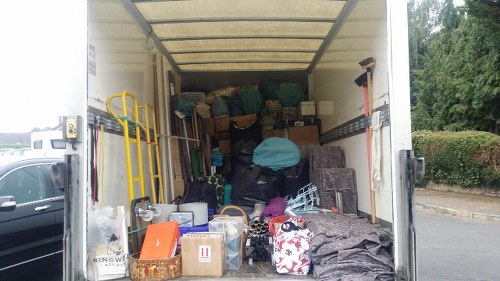
Commercial waste in Battersea needs a service that is practical, steady and clear about what happens after collection. For shops, offices, workshops, hospitality premises and managed properties, we handle routine waste removal with an emphasis on separation, loading and responsible transfer to the right onward process. The aim is simple: keep business premises clear of unwanted material without creating avoidable disruption or confusion over what can be taken.
Our work covers regular and one-off commercial clearances, including mixed general waste, recyclable materials and bulky items that need manual handling. Where a business is refreshing a unit, reducing stock or emptying back-of-house storage, we can remove the material in a way that fits the site and the items involved. If you need a quotation, the most helpful starting point is to share a short description of the waste and the access available.
For businesses that want a straightforward way to plan the job, the service can be discussed around volume, item type, access and any separation requirements. You can use the pricing and quotes page to see the kind of information that helps shape an accurate price. If you are ready to move on, tell us what needs removing and when, and we can take it from there.
Commercial waste collections shaped around your premises
Different premises generate different waste streams, and the collection method should reflect that. A small office may mainly need paper, cardboard and packaging taken away, while a retail or hospitality site might produce a broader mix that includes disposable items, broken equipment and heavier sacks. We focus on the practical side: access, load size, safe lifting and making sure the waste is sorted in a way that supports the next stage of disposal or recycling.
Where the material is straightforward, collections can usually be organised as a clear lift-and-remove job. Where there are several waste types together, it helps to separate what can be diverted from general disposal. That is especially useful for offices and service businesses with mixed packaging, confidential material, outdated furnishings or appliances. Clear information at the start makes it easier to match the collection to the actual job instead of overcomplicating it.
For businesses that need a broader service, our business waste removal page gives a more direct picture of the work involved. When the waste is no longer just loose sacks or general refuse, a careful description of the items helps identify whether the collection should be arranged as standard removal or as a more specific service.
Office waste, fittings and day-to-day clearances
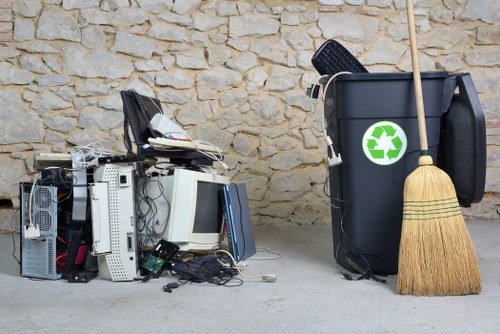
Offices often need waste removed in stages rather than all at once. The service may involve old chairs, desk units, archive boxes, monitors, packaging and miscellaneous fittings that have built up over time. We work with the sort of items that are awkward to move through shared corridors or lift access, and we keep the approach practical so the collection fits around your space rather than the other way round.
Some offices are mainly looking to clear redundant items before a refit, while others want a reliable way to deal with recurring waste from everyday operations. In either case, it helps to distinguish what is ordinary office waste from what needs separate handling. If confidential paperwork is among the items, it may need a different treatment from furniture or mixed rubbish, and that should be identified before the collection is booked. The office clearance page is useful where the job is centred on desks, chairs and workroom items rather than general waste alone.
Typical office collections can include:
- paper and card ready for appropriate sorting
- old office furniture and storage units
- non-hazardous equipment and accessories
- general waste gathered from back rooms or store cupboards
Furnishings, appliances and bulky items
Bulky waste is often the part that makes a site feel congested, especially when items have been moved into corners, basements or unused rooms. Furniture, white goods and other large objects need enough space for safe lifting and a suitable route out of the building. We deal with items that are too awkward for ordinary bins, and we keep the process focused on practical removal rather than unnecessary disruption to the rest of the premises.
Where the job includes furniture, it is worth considering whether the pieces are still in usable condition, broken down for disposal or mixed with other waste from a wider clear-out. That distinction can affect how the collection is planned. If you are mainly dealing with sofas, beds, tables, wardrobes or similar household-style items from a commercial setting, the furniture disposal page is a relevant place to look for a more specific description of that work.
For some businesses, the removal of bulky items is only one part of a broader clearance. For others, it is the main task, especially where old furniture is replaced after a refit or a tenancy change. In those cases, the best quotation details are the item types, the approximate number of pieces and whether they are on one floor or several.
Recycling, sorting and responsible disposal
Good commercial waste management is not only about taking material away; it is also about deciding what can be separated before it leaves the site. Cardboard, metals, some plastics, appliances and reusable fittings may need different treatment from ordinary mixed waste. By separating materials where practical, a business can keep disposal more orderly and avoid treating every item as if it belonged in the same stream.
This matters most when the waste includes a blend of packaging, fixtures, office contents and trade rubbish gathered over time. Some loads can be sorted at source, while others need handling after collection because the items are already mixed or damaged. We approach the work with that reality in mind, so the collection reflects the actual condition of the waste rather than an idealised version of it. Sorting before collection is helpful, but it is not always necessary to overprepare the site.
Businesses interested in what happens to different materials can review the recycling and sustainability page. It is a useful point of reference where you want a clearer sense of material separation, and it helps frame what information to include when you request a quotation for mixed commercial waste.
Hazardous and specialist items that need separate attention
Not every item should be treated as ordinary commercial waste. Some materials need extra care because of contamination, chemical content, breakability or other handling restrictions. In practice, that may mean the load has to be separated before collection or arranged through a different process altogether. We do not assume that every business item can go into the same collection, and that distinction protects both the site and the handling process.
Where specialist waste is involved, the exact nature of the items matters more than the general label. Batteries, chemicals, certain cleaning products and other restricted materials may require different controls from normal rubbish or furniture. If your waste includes anything that is potentially sensitive or unusual, it is better to describe it plainly at the outset rather than waiting until the day of collection. The hazardous waste disposal page is the relevant destination for this type of work when a separate arrangement is needed.
Two practical points help keep the enquiry accurate without making it complicated: list the item types as clearly as you can, and say whether they are separated already or mixed with ordinary waste. Those two details often determine whether a site can be served as a routine commercial clearance or whether a more cautious approach is needed.
Pricing factors and quotation details
Commercial waste pricing is usually shaped by the volume of material, the kind of items involved and the conditions on site. A collection involving light packaging and sacks of general waste is very different from a load of heavy furniture, broken fittings or mixed materials that need sorting. Access also matters: stairs, lifts, long carrying distances and limited parking can affect how a job is organised, especially in busier commercial streets and shared buildings.
It is usually enough to provide a short description of the waste, any obvious restrictions and the amount you expect to clear. If the job is a repeat collection, it helps to say whether the pattern is regular or occasional. For one-off clearances, mention whether the items are spread across several rooms, stored in a rear yard or stacked in a single area. You can use the contact us page when you are ready to request a quotation and want to pass on those basic details.
Good quotation information is not about writing a long message. A few clear facts will normally do the job: item types, approximate quantity, access and any separation or timing considerations. That gives a basis for a quote that reflects the actual work rather than a rough guess.
Planning collections in active business settings
Busy premises often need waste removed without interrupting customers, staff or deliveries. That means the collection has to fit the working pattern of the site, whether the waste is ready in a back room, a storage area or an external point that can be reached without crossing public areas. Careful planning is most useful where material has to be lifted through shared entrances, or where the building has tight access and limited space for handling.
For some clients, a collection is part of a unit handover, stock reset or refurbishment. For others, it is a routine clean-up to stop waste from accumulating in places where it should not be stored. The most useful preparation is usually to make the items accessible and to say in advance if there are gates, coded entrances, loading restrictions or time windows to observe. If the job concerns wider premises management, the about us page gives a broader overview of the company background and can sit alongside the service information here.
Planning is simpler when the collection area is identified clearly, but that does not mean the site needs to be stripped back or arranged in an artificial way. The practical goal is to make the waste reachable and to avoid surprises about the route out. That saves time and helps the collection run in a tidy, orderly manner.
About Battersea
Battersea sits on the south bank of the River Thames in the London Borough of Wandsworth and is known for a mix of riverside development, historic streets and long-standing civic landmarks. The district includes Battersea Park, a large Victorian park opened in the 1850s, and the much-recognised Battersea Power Station, whose redevelopment has become one of the area’s defining recent changes. Together they give the place a strong contrast between open green space, industrial heritage and contemporary architecture. The riverside has long influenced the character of the district, with views across the Thames and a network of routes that connect the river edge with the residential streets inland.
The area also has a notable transport story. Battersea Park and Queenstown Road stations serve the locality, while Clapham Junction lies just to the south-west and remains one of the busiest rail interchanges in the country. Local streets such as Lavender Hill and Northcote Road are associated with day-to-day shopping and neighbourhood activity, while York Road and the riverfront reflect the area’s commercial and redevelopment history. Battersea’s built environment ranges from Victorian terraces and mansion blocks to newer residential and mixed-use schemes, and that mixture helps explain why the district has retained a varied urban feel. Cultural life has also been shaped by places such as the Royal Academy of Dance, which has a long association with the area, and by the continuing presence of public spaces, cafes, markets and riverside walks that make it a lively part of south-west London.
Commercial waste services for different property types

Commercial waste needs differ by property type, and the service should reflect that rather than forcing every job into the same pattern. Offices, retail units, managed blocks, workshops and hospitality premises each create distinct waste streams and access conditions. A clear commercial collection therefore starts with the items, not with a generic assumption. We focus on what is present, how it is stored and what can be moved safely and efficiently.
In a managed or shared building, waste may be generated in several places and gathered into a single storage point. In a shop or customer-facing premises, the same collection may need to happen outside opening hours or around deliveries. In a workshop, the waste may include packaging, fixtures and used equipment. The service can be shaped around those differences, so the removal method suits the premises rather than disrupting them. If your job is mainly about mixed business refuse rather than a specific item category, the waste removal page is a good general reference.
That flexibility matters because commercial waste is rarely uniform. Some sites need a simple clear-out, while others need a repeat collection that keeps storage areas manageable. When you ask for a quotation, it helps to say which parts of the site the waste is coming from and whether the items are grouped or scattered. Specificity saves time and helps the service match the work properly.
Fit-outs, clear-outs and items with a limited onward life
Many commercial jobs arise when a unit is changing use, being refreshed or cleared for a new occupier. In those cases, the waste may include a combination of old fittings, disposable packaging, damaged stock and furniture that no longer has a place in the premises. The collection has to deal with the whole mix, but the individual components may still need to be handled differently once removed.
Some materials are simple to move yet awkward to categorise, which is why the description of the job matters as much as the physical items. A fit-out clearance may involve dismantled shelving, small fixtures and loose waste, while a closer-out job might include larger items that require more carrying space and more care at exit points. For jobs where loose items and furnishings dominate, the flat clearance page can help if the work overlaps with emptied living or work-residential spaces rather than an ordinary business unit.
When deciding what to include in the quote request, remember that a short inventory is often enough. Note the kinds of items, the floor they are on and whether the unit is being emptied in one visit or in stages. That is usually the clearest way to prepare the work without creating unnecessary admin.
Bulky white goods, appliances and mixed loads
Some commercial waste jobs include appliances or white goods alongside other rubbish, particularly in premises with kitchens, staff rooms or storage areas. These items can be heavy, difficult to manoeuvre and awkward to place with general refuse. The collection method therefore needs to consider both lifting and separation, especially where the appliances are surrounded by packaging, shelving or other debris.
Mixed loads are common in real commercial settings, and they are usually best handled by describing the load as it actually exists rather than trying to fit it into one neat category. A mixed load might contain broken furniture, packaging, a fridge unit, loose waste and miscellaneous fittings. The more accurately that is described, the more closely the quotation can reflect the practical work involved. Where appliances are the main part of the job, the fridge and appliance removal page gives a more specific route into that type of clearance.
For premises that have a few large items rather than a full clearance, it is still worth flagging the access route, the number of items and whether they are in a basement, upper floor or rear storage area. Those details let the collection be organised around the site instead of forcing the site to adapt to an inflexible process. If you are ready, send a concise description and request a quotation.