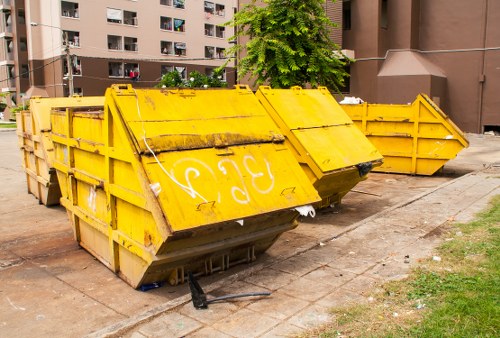
 Health and Safety Policy — Commercial Waste Battersea
This Health and Safety Policy sets out the standards and responsibilities for managing commercial waste across our service area. It is designed to protect employees, contractors, clients and the public while ensuring compliant and efficient rubbish collection and waste handling operations. The policy applies to all activities related to commercial refuse collection, transfer, storage and disposal undertaken by the company. It reflects our commitment to preventing accidents, reducing occupational risks and maintaining a safe operational environment for all stakeholders.
Scope and Objectives
The scope includes all premises, vehicles and sites used in the provision of commercial waste services, including bulky waste removal, regular bin collections and on-site handling of commercial refuse. Objectives are to minimise workplace incidents, control exposure to hazardous materials and promote safe working practices throughout the waste management lifecycle. This policy supports continuous improvement through monitoring, training and regular review.
![A large outdoor pile of discarded electronic waste and old televisions, consisting of various models with different sizes and finishes, including some with wood-effect casings, black plastic, and metal frames. The televisions are stacked haphazardly on a paved surface, with some tilted or leaning against each other. Surrounding the pile, there are loose wires, plastic packaging, and small electronic components, indicating an accumulation of unwanted or obsolete electronics. In the background, a red brick wall and a green grassy area with a lamp post are visible, suggesting the waste is situated on a street or within a commercial or residential area in Battersea. The scene is illuminated by natural daylight, with no visible activity or people present, reflecting a typical site for rubbish removal and recycling before collection by [COMPANY_NAME], which offers waste management services in the Battersea area related to rubbish disposal.](/pub/_photos/rubbish/f1351178240.jpg) The policy aims to deliver clear expectations for safe behaviour and risk mitigation. It emphasises the importance of documented risk assessments, safe systems of work and appropriate personal protective equipment (PPE). The document outlines roles, responsibilities, reporting procedures and performance measures that ensure the safety of staff and the public during rubbish removal and commercial waste operations.
The policy aims to deliver clear expectations for safe behaviour and risk mitigation. It emphasises the importance of documented risk assessments, safe systems of work and appropriate personal protective equipment (PPE). The document outlines roles, responsibilities, reporting procedures and performance measures that ensure the safety of staff and the public during rubbish removal and commercial waste operations.
Policy Statement
We will operate our commercial waste service in a manner that minimises health and safety risks and exercises due diligence in line with national standards. Our waste management operations will be planned, resourced and supervised so risks associated with manual handling, vehicle movements, hazardous materials and confined spaces are identified and controlled. All employees and contractors are expected to co-operate with procedures and participate in safety activities.
 Responsibilities are allocated to ensure accountability at every level. Senior management will provide leadership and resources; supervisors will implement risk controls and front-line employees will follow safe systems. Everyone has a duty to report unsafe acts, damaged equipment and near misses promptly so corrective action can be taken without delay.
Key principles include:
- Robust risk assessments for all routine and non-routine tasks
- Suitably maintained vehicles and equipment for rubbish collection and commercial refuse handling
- Training and competence assessments for hazardous waste and specialist operations
- Use of appropriate personal protective equipment and safe manual handling techniques
- Clear segregation and labelling of waste streams to reduce exposure to harmful substances
Operational Controls and Safe Systems
Workplace controls include written safe work procedures, vehicle movement plans, exclusion zones during loading and unloading, and secure storage for commercial waste pending transfer. Mechanical aids and trolley systems are used to reduce manual handling. Routine maintenance schedules ensure lifting and containment equipment are in safe working order. Vehicle safety systems such as reversing alarms, mirrors and spotters are standard on all collection vehicles.
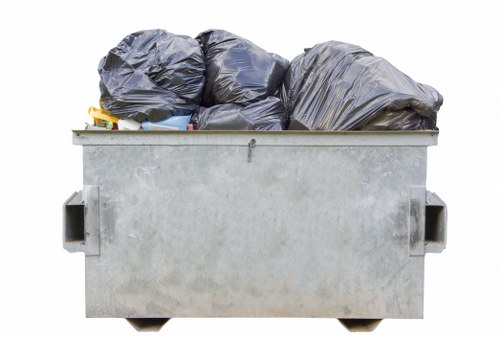 Training and competence are essential. Induction programmes, periodic refresher training and task-specific instruction ensure staff understand hazards such as sharps, chemical residues, and biological contamination common in commercial waste. Employees receive instruction on emergency procedures, spill containment and the safe segregation of recyclable and hazardous streams.
 Incident reporting and investigation procedures ensure learning and improvement following accidents, near misses or health concerns. All events are recorded and analysed to identify root causes and implement corrective measures. We monitor performance through site inspections, audits and key safety indicators to drive continuous reduction in incidents across the rubbish collection and commercial waste service.
Contractor management requires that suppliers and subcontractors operate to equivalent safety standards. Pre-qualification, documented safety arrangements and on-site supervision ensure consistency in commercial rubbish handling where third parties are involved. Permits and isolation procedures are used where work introduces additional hazards.
Emergency response arrangements are maintained to manage fire, spill, injury or other incidents. Designated first aiders, trained emergency coordinators and access to medical support are part of the preparedness plan. Evacuation and assembly points are defined for all operational sites and will be practiced periodically to confirm readiness.
This policy will be kept under regular review and updated to reflect changes in operations, technologies and legislative expectations. Performance will be communicated via briefings and toolbox talks so that the principles of safe commercial waste collection and refuse management are integrated into daily routines. Management will report on progress and ensure adequate resources for effective implementation.
All personnel are required to read, understand and comply with this policy. Non-compliance will be addressed through support, retraining or disciplinary measures where necessary to protect the workforce and the public. By working together to apply these standards, we maintain a professional, safe and reliable commercial rubbish and waste service that values health and safety as a core business priority.
